Here are some photos of a pueblo about 7 km from our home


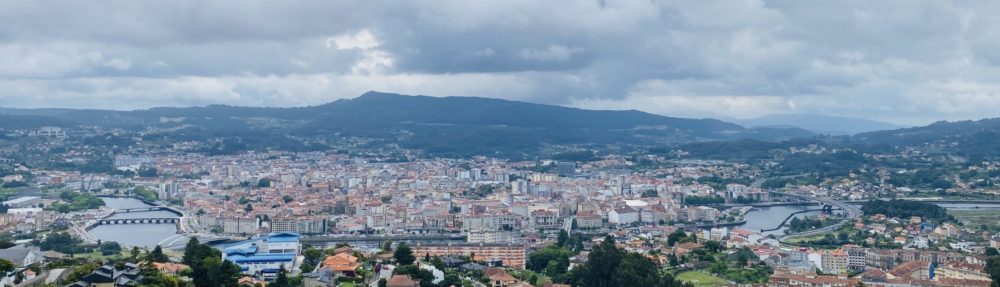
Here are some photos of a pueblo about 7 km from our home
How is that for a title?
Book: Chirico, Leonardo De. A Christian’s Pocket Guide to Papacy. Christian Focus Publications, 2015. 
(For the full review click on the title)
Point: The papacy is a global institution with incredible influence but no Scriptural support.
Path: The author helps the non-Catholic navigate the question of the Papacy by explaining its origins, its history, its influence, and its current manifestations.
Favorite Quote: “…the official titles of the Pope: ‘Bishop of Rome’ ‘Vicar of Jesus Christ’ ‘Successor of the prince of the Apostles’ (i.e. Peter) ‘Supreme Pontiff of the Universal Church’ ‘Primate of Italy’ and ‘Archbishop and Metro-politan of the Roman Province’ ‘Sovereign of the State of the Vatican City’ ‘Servant of God’s servants’. This list of Papal titles is astonishing and covers various religious offices, political tasks and organizational responsibilities. Each title provides a different perspective on the Papal office, and taken as a whole they help one appreciate who the Pope is and what he does” (Kindle, 97).
Stars: 4 out of 5
It would be worth another read and I would recommend it to someone who:


We have been taking an afternoon a week to visit the nearby villages, and this past week we visited Toral de Merayo. It has about 550 inhabitants and is situated in a small valley across the river from Ponferrada. We ran to the village (about 6 km away), walked around a little, and tested out the playground equipment.
To my knowledge, there are three ways to get to this village. You can walk across the edge of El Pajariel (the small mountain that borders Ponferrada on its southern edge); take the road on the east side of Ponferrada (which was washed out for a while during our rainy season), or take the the highway out and around, looping back in through gravel paths.
Toral, like many other villages, feeds Ponferrada – in multiple ways. These villages are home to many gardens, orchards and vineyards, so their produce ends up at the market in Ponferrada. The inhabitants are also often times employed in Ponferrada.


One thing I am extremely thankful for in the Spanish culture is the options I have for meal times.
When I wake up I have Desayuno. This could be fruit, cereal, yogurt, potatoes, pastries, etc., served with coffee (as could any of the following).
A morning snack is called Almuerzo. Normally eaten from 11-1, this could be a tapa, fruit, pastries, etc.
When we eat together in the afternoon we have Comida. This is normally the largest meal and is eaten in the middle of the day – not to be confused with noon. Midday is 2-4 pm, otherwise known around the world as the hours of siesta.
The afternoon snack is Merienda. The fruit, vegetables, or a small sandwich helps one carry over until the final meal of the day.
The evening meal is Cena. Traditionally served after 8 pm (closer to 9 or 10), our family normally eats around 7 pm on “normal” days.
Effectively, there is no time during the day when there is not a legitimate time to eat. What a beautiful thing.

This past week was Semana Santa, or Holy Week. It was our first time to experience a Spanish festival of this magnitude. There are many events and experiences that go into these unique days, and we were only able to mentally process a few of them.
Observations:
Around this special week one will find  signs in nearly every dining establishment advertising “Limonada,” or “Lemonade.” This is a beverage consisting of various ingredients including some form of alcohol, fruit beverage, and a variety of flavors. It has a long history which goes back to the persecution and expulsion of the Jews under Ferdinand and Isabella (15th and 16th centuries).
There are multiple processions throughout the city at varied hours. Some starting at 6 am, and others going late into the night. They normally include trumpets, drums, religious garb (the pointed hats hold a very different meaning here than they would in the United States), and prayers. These lengthy processions have special meaning for the community in which they are enacted, the day on which they take place, and the float which they are displaying.
 Those who participate in the processions are normally part of a specific brotherhood, some which originated in the Middle Ages, others during the Counterreformation, and some in modern times. To outsiders like ourselves, it appears that this is often a family affair.
There are multiple celebrations of the Mass in the cathedrals around town, restricted hours of service in stores and restaurants, and an increase in visitors (at least in our city!).

Thoughts:
This is both a cultural and religious time. It would be completely naive to think that this is religious for all the participants and observers.
What I appreciate:
This is a very solemn time, at least during the processions, fitting of the final days of Jesus.
I can appreciate the great lengths to which these participants have gone to commemorate the life, work, and death of Jesus.
This is a time where families unite and spend extended time together, made possible by a seemingly nationwide vacation.
This is a cultural bonding time in the life of the city and surrounding pueblos, something which is often missing in other parts of the world. It may be equivalent to a small town 4th of July parade.

Where I disagree:
Because of the cultural aspect, the religious aspect can be pushed aside.
I cannot discern the heart motives, but appearance point toward a pursuit of righteousness by works, something to which Jesus was adamantly opposed (Matthew 23).
There is a great emphasis upon the days leading up to the crucifixion, but the Resurrection is all but forgotten. In contrast, Jesus, the apostles, and the early church proclaimed the life, death, burial, AND resurrection of Jesus. This final act is what stood as the seal to the completed work of Christ, and therefore takes special priority in the life of the followers of King Jesus (1 Corinthians 15).

Summary:
To live in Spain is to participate in Semana Santa. It is our desire that those here might experience it not only in deed, but also in transformational belief.
 To see more photos, you can check our our Spain Photostream here

Botillo
When you move to a new place and want to try out their specialized cuisine, you can’t be picky.
Here in our valley, El Bierzo, a famous meal is Botillo. It is meat-stuffed pork intestines. “What meat is stuffed in there?” you may ask. That, my friend, is a good question. But as a connoisseur of hotdogs, I don’t worry about it too much.
I do know that something this good isn’t just whipped up in an afternoon. The process to make botillo is at least five days.
We are so proud of it here that one nearby village has a large statute in commemoration.

Graffiti
Spain has impressive artists in its history. Individuals such as Picasso, Goya, and El Greco have invested incredible effort in speaking through art.
But there are other artists whose work is seen without buying a museum pass. Spain is full of graffiti. It can be much more than a four letter word scrawled on a boxcar. Much of it makes you scratch your head and ask, “Why would you spray paint over something with so much history?” Others make you think, “Wow!”
There are even some celebrity artists whose names appear on buildings and bridges for hundreds of kilometers around Madrid. The amount of effort put into scrawling their name on an underpass is impressive, albeit confusing. *How much time and money did you put into this?*
Some businesses have chose to hire a graffiti artist to paint their building, probably to keep other graffiti off of it (I guess graffitiing a graffiti is bad mojo?!?).
So I ask a question, “Is graffiti art?” Can it be art if it is destroying personal or public property? Is it art if it is commissioned? Is it only art if it is beautiful, or realistic, or grand?
And if it is art, what truth is it fit to communicate?
And if it communicates that message well, is there a way to appreciate the work and the message?


One of our new favorite activities
